Specialized wireless solutions for underground infrastructure
Underground infrastructure presents unique challenges for wireless communication. The confined spaces, metallic structures, and electromagnetic interference that characterize tunnels require specialized engineering to achieve reliable radio coverage.
Well-engineered tunnel systems ensure that workers, emergency responders and operations personnel can communicate effectively throughout underground environments.
Planning GuideDeep-bored metro lines are among the hardest cases, because digital radio coverage has to be engineered through kilometers of deep tunnel. Practical experience of real infrastructure matters more here than theoretical understanding.
Communication infrastructure is often installed during tunnel construction, which means coordinating with civil works contractors, tunnel boring machine operators, rail installers and systems integrators so that it integrates with overall tunnel operations.
Where tunnel coverage is needed
Digital communication networks for automated metro lines, carrying coverage through deep tunnel sections far below ground.
Communication systems for high-speed rail tunnels, supporting construction operations and then ongoing rail communications across the network.
Cross-border tunnel projects requiring coordination of communication standards across national boundaries.
Tunnel radio communication typically employs distributed antenna systems (DAS) or radiating cable (leaky feeder) technology to achieve uniform coverage throughout the tunnel length. The choice between these approaches depends on tunnel geometry, required frequencies, and operational requirements.
Radiating Cable Systems use specially designed coaxial cable that intentionally leaks RF energy along its length, creating a uniform signal throughout the tunnel. This approach is particularly effective for long tunnels where traditional antennas would leave coverage gaps.
Distributed Antenna Systems place multiple small antennas throughout the tunnel, connected to central equipment via fiber optic or coaxial links. This approach offers flexibility for multi-frequency deployments and easier maintenance access.
Engineers evaluate each tunnel environment to choose the most appropriate technology, considering factors including tunnel cross-section, length, curvature, construction materials, required frequency bands and expected traffic levels.
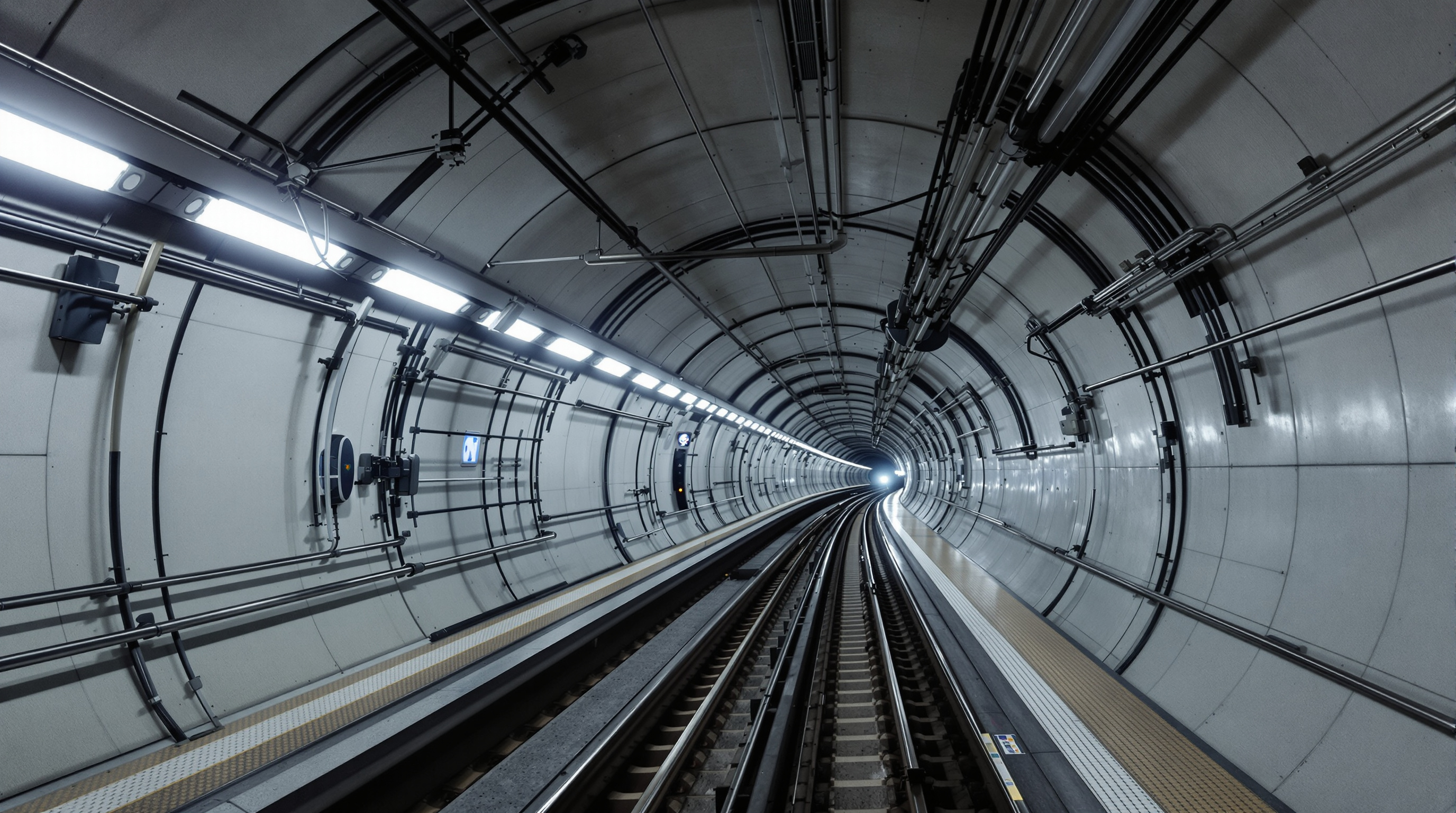
Reliable radio coverage during tunnel construction enables coordination between surface and underground operations, improving safety and efficiency.
Public safety radio coverage ensures fire, police, and medical responders can communicate during tunnel emergencies.
Train-to-control communications for metro and rail operations, including voice and data applications for operational efficiency.
Coverage for maintenance crews and emergency response in road tunnels, often integrated with tunnel management systems.
Tunnel environments demand exceptional attention to communication reliability. Unlike surface operations where communication failures may cause inconvenience, tunnel communication failures can compromise safety during emergencies when evacuation or rescue coordination is critical.
Tunnel systems are designed with appropriate redundancy, including backup power supplies, equipment failover and multiple signal paths, and thorough testing verifies coverage throughout the tunnel and at transition zones between underground and surface communications.
Installations are designed to comply with relevant safety standards, including requirements from ITU telecommunications standards and European rail safety directives.
ETSI's description of TETRA identifies two functions relevant to communication resilience: Direct Mode Operation and emergency-call priority. Direct Mode Operation lets radio terminals communicate with each other without network infrastructure, supporting communication where network coverage is absent or during an outage. Emergency-call handling gives urgent calls priority and allows them to be established when a network is congested or under heavy load. These functions address different situations: the first concerns direct communication between terminals, while the second concerns access to a busy network. That distinction helps separate questions about communication without infrastructure from questions about handling competing calls. Neither description establishes the coverage of a particular tunnel installation.
Coverage method, redundancy and emergency-services access are the questions to settle early in the design of any underground system.
Tunnel Guide